China has become a major source of Permanent Magnet Motor technology, serving industries from factory automation to electric vehicles. Its manufacturers offer broad production capabilities, competitive pricing, and increasingly advanced engineering support. However, choosing a reliable supplier requires more than comparing catalog prices.
This guide examines leading Chinese manufacturers through practical criteria. These include motor efficiency, torque stability, magnet quality, thermal management, and production consistency. It also considers certifications, testing equipment, customization experience, and after-sales communication. A dependable manufacturer should explain its design choices clearly. Factory visits, sample testing, and technical documentation can reveal details that online profiles often miss.
Small details matter. Look for clean assembly areas, traceable components, calibrated testing machines, and clear inspection records. Ask how the supplier controls rotor balance and protects magnets from corrosion. Request performance curves under realistic loads, not only ideal laboratory conditions. Past project experience is useful, but it does not guarantee future results. Some companies may appear impressive yet lack strong support after delivery. Others may be less visible but technically capable.
This overview is not a final ranking. It is a practical starting point for careful evaluation. Buyers should verify current certifications, production capacity, lead times, and export experience independently. Requirements also differ between a compact servo motor and a high-power industrial drive. The best choice depends on application conditions, operating environment, budget, and long-term service expectations. A thoughtful decision takes time. That is often worthwhile.
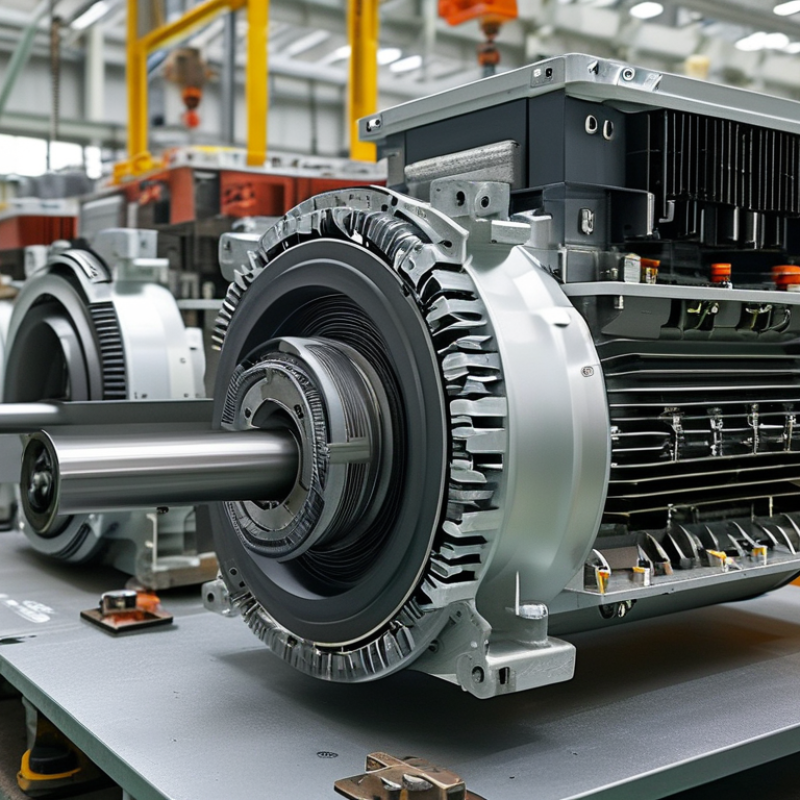
China’s permanent magnet motor industry produces several designs for industrial, automotive, and consumer equipment. The most common types include permanent magnet synchronous motors, brushless DC motors, and permanent magnet DC motors. Each design serves a different operating need.
Permanent magnet synchronous motors deliver stable speed and strong efficiency under variable loads. They suit compressors, pumps, elevators, and factory automation systems. Brushless DC motors use electronic commutation instead of mechanical brushes. This reduces wear in cooling fans, power tools, medical devices, and small mobility systems. Permanent magnet DC motors remain practical for compact machines with simple control requirements. Their straightforward structure can reduce initial system costs.
Some Chinese manufacturers also develop surface-mounted and interior permanent magnet motors. Surface-mounted magnets support high-speed operation and simpler rotor construction. Interior magnet designs provide stronger torque and better overload performance. They often appear in electric vehicles, servo systems, and high-performance drives. Axial-flux motors are gaining attention for thin equipment and space-limited platforms. The technology is promising, but production consistency still requires careful evaluation.
In real purchasing work, motor selection should begin with torque, speed, voltage, duty cycle, and cooling conditions. A high efficiency rating alone does not guarantee reliable field performance. Engineers should review magnet retention, winding insulation, vibration data, temperature tests, and controller compatibility. Production samples may expose small issues that brochures overlook. That is worth remembering. A dependable manufacturer should provide traceable testing records, dimensional reports, and clear communication about tolerances.
When evaluating permanent magnet motor manufacturers in China, look beyond catalog efficiency figures. A reliable supplier should explain magnet grade, winding design, insulation class, and expected operating temperature. Ask for test records from actual production units, not only laboratory samples. Torque curves matter more than attractive brochure claims.
Factory experience becomes visible in small details. Check whether magnets are bonded securely and balanced rotors are measured before assembly. Review traceability for copper wire, bearings, and magnetic materials. Request sample motors under your real load, voltage, duty cycle, and ambient conditions. A motor that performs well for ten minutes may fail after continuous operation.
Quality systems deserve careful verification. Confirm applicable certifications, inspection procedures, IP ratings, and electrical safety controls for your target market. An on-site or video audit can reveal storage conditions, calibration labels, and final testing stations. Communication is another selection criterion. Engineers should answer technical questions clearly and provide drawings, tolerances, and delivery schedules.
Be realistic about customization. Small design changes can affect heat, noise, and service life. I once focused too heavily on unit price and underestimated tooling costs. That was a costly lesson. Compare total ownership costs, including testing, spare parts, warranty response, and rejected units. Ask how failures are analyzed. Honest answers matter. Some suppliers may not fit every project, and that is acceptable when limitations are stated early.
Leading permanent magnet motor manufacturers in China are responding to fast-growing electrification demand. The China Association of Automobile Manufacturers reported 9.59 million new-energy vehicles produced in 2023. Sales reached 9.50 million units. The International Energy Agency recorded nearly 14 million electric car sales worldwide that year. China contributed more than half. These figures explain the expanding need for compact, efficient, and thermally stable motors.
Experienced manufacturers usually provide more than catalog ratings. They verify rotor balance, magnet retention, winding insulation, and temperature rise under continuous loads. Reliable factories also document torque curves, efficiency maps, noise levels, and endurance results. Testing matters. Buyers should request reports aligned with IEC 60034 requirements. A factory visit can reveal practical details, including clean assembly areas, calibrated instruments, and traceable material records.
Material control remains critical. Rare-earth magnet grades, adhesive quality, and demagnetization resistance directly affect long-term performance. According to the IEA, motor-driven systems represent a major share of industrial electricity use, so small efficiency gains can produce meaningful savings. However, supplier claims are not always comparable. Data beats slogans. One weakness in many evaluations is overemphasis on peak efficiency. Continuous duty, cooling conditions, service support, and batch consistency deserve equal attention. Leading Chinese manufacturers stand out when engineering evidence supports their promises.
For China’s permanent magnet motor manufacturers, compliance begins with standards, not advertising.
IEC 60034 defines key requirements for motor performance, testing, temperature rise, and efficiency. China’s GB/T 18613-2020 standard also sets energy-efficiency requirements for selected motor classes. Buyers should request the exact test method and rated operating conditions. “High efficiency” alone proves little.
A reliable factory normally operates under ISO 9001 quality management, while automotive projects may require IATF 16949. ISO 14001 can indicate controlled environmental practices, including handling of magnet coatings and industrial waste.
During an audit, inspect incoming magnet reports, rotor-balance records, insulation tests, and final load-test data. Check whether each rotor carries a traceable batch code. Records matter. Small defects spread.
The International Energy Agency’s Energy Efficiency 2017 report estimates that electric motor systems consume roughly half of global electricity.
That figure makes efficiency verification commercially important, not decorative. Independent laboratories should confirm efficiency, power factor, vibration, noise, and thermal performance. A factory may pass a sample test yet struggle with production consistency. This is where supplier evaluations often become too optimistic.
Review failure rates, corrective-action reports, calibration intervals, and retained samples from several production lots. The U.S. Department of Energy also emphasizes system-level testing, because a motor’s actual savings depend on drives, loads, and operating profiles.
Ask for measurements under your real duty cycle, not only a polished catalog rating.
Chinese permanent magnet motor manufacturers supply equipment for factories, buildings, vehicles, and renewable energy systems. Their motors provide strong torque, compact designs, and lower energy losses than many conventional induction motors.
In industrial fans, pumps, and compressors, these motors support continuous operation and precise speed control. A 30-kilowatt motor can reduce cabinet space in a crowded production line. Electric buses and logistics vehicles also use permanent magnet motors for efficient acceleration and quieter driving. In wind turbines and small hydro systems, direct-drive designs can reduce gearbox maintenance. Field experience shows that cooling design matters as much as rated efficiency. Poor heat control can shorten service life.
Export demand is strong across Southeast Asia, Europe, the Middle East, and South America. Chinese suppliers often ship complete motors, drive systems, spare parts, and technical documents. Buyers usually request tests for efficiency, insulation, vibration, noise, and temperature rise. Certification and voltage requirements differ between markets, so documentation must be checked before production. A factory audit can reveal winding quality, rotor balance, and final inspection practices. Not every shipment is flawless. Delivery delays, unclear drawings, and inconsistent testing still occur. A low quotation may hide weaker bearings or limited after-sales support. Careful sample testing and written performance terms create a more reliable purchasing process.
Permanent magnet motors are widely used in electric vehicles, HVAC systems, industrial automation, pumps, compressors, elevators and renewable-energy equipment. China’s main export links include East Asia, Europe, North America, Southeast Asia and India, where demand is supported by energy-efficiency regulations and electrification projects.
The chart uses a normalized 0–100 relevance index to compare established application demand and export-market connectivity. It is not a company ranking or an official market-share statistic.
: Review performance, testing, temperature-rise, and efficiency requirements under applicable motor standards. Request the exact test method. “High efficiency” alone proves little.
ISO 9001 suggests a structured quality system. Automotive projects may require IATF 16949. ISO 14001 can support controlled environmental practices.
Check incoming magnet reports, rotor-balance records, insulation tests, and final load-test data. Each rotor should carry a traceable batch code. Records matter.
No. A sample may pass while production consistency remains weak. Review several production lots, retained samples, failure rates, and corrective-action reports. One good sample proves little.
Request efficiency, power factor, vibration, noise, and thermal testing. Use operating conditions that match the intended application. Polished catalog ratings can mislead.
Actual energy savings depend on the drive, load, and operating profile. Test the motor under its real duty cycle when possible. Theory is not enough.
Common applications include industrial fans, pumps, compressors, electric vehicles, and renewable-energy equipment. A 30-kilowatt motor can reduce cabinet space on a crowded production line. Compactness helps.
Voltage, certification, drawings, and documentation requirements differ between markets. Confirm them before production begins. Low quotations may hide weaker bearings or limited support.
Cooling can matter as much as rated efficiency. Poor heat control may shorten service life during continuous operation. This risk is easy to underestimate.
Conduct a factory audit and require written performance terms. Inspect winding quality, rotor balance, calibration intervals, and final inspection practices. The review can still miss something.
China has become a major manufacturing base for Permanent Magnet Motor products, offering a broad range of designs such as permanent magnet synchronous motors, brushless DC motors, servo motors, and specialized high-efficiency units. When selecting a Chinese manufacturer, buyers should evaluate technical expertise, production capacity, customization capabilities, material quality, energy efficiency, delivery reliability, after-sales support, and experience with international projects. A dependable supplier should also demonstrate consistent engineering processes and transparent communication throughout the purchasing cycle.
Leading manufacturers in this sector typically apply strict production controls, automated testing, and systematic quality inspections to ensure stable performance and long service life. Compliance with recognized manufacturing standards and certifications is also important for safety, efficiency, and market access. Chinese Permanent Magnet Motor products are widely used in industrial automation, electric vehicles, renewable energy systems, robotics, HVAC equipment, pumps, and precision machinery. Their export markets continue to expand because of competitive pricing, improving technology, flexible customization, and growing demand for energy-efficient motor solutions.

KINOV Motor