Global buyers are asking a practical question: China Best High Performance Motor for Global Buyers? The answer depends on evidence, not attractive specifications alone. A capable High Performance Motor should deliver stable torque, efficient cooling, low vibration, and dependable operation under real working conditions.
Professor Jacek F. Gieras, a respected electric motor researcher and author, describes electric motors as “the workhorses of modern industry.” His point remains relevant. A motor may look impressive on a laboratory sheet, yet perform poorly beside a dusty conveyor or inside a hot production line. Buyers should examine winding quality, magnet retention, bearing design, insulation class, ingress protection, and controller compatibility. Test reports matter.
Look beyond price.
Experienced purchasers often request load curves, thermal test results, noise data, and samples before placing large orders. They also verify factory capabilities, quality-control procedures, warranty terms, and after-sales support. International certifications can strengthen confidence, but they do not replace independent performance testing.
Chinese manufacturers offer broad customization, competitive production capacity, and increasingly sophisticated motor technologies. However, quality varies between suppliers. That uncomfortable fact deserves attention. Some product pages provide impressive efficiency figures without explaining test conditions, duty cycles, or measurement equipment.
This guide will examine how global buyers can compare Chinese High Performance Motor suppliers with greater accuracy. It will consider technical performance, manufacturing experience, documentation, communication, and long-term reliability. No single supplier fits every application. A better decision begins with honest requirements, measurable evidence, and careful verification.
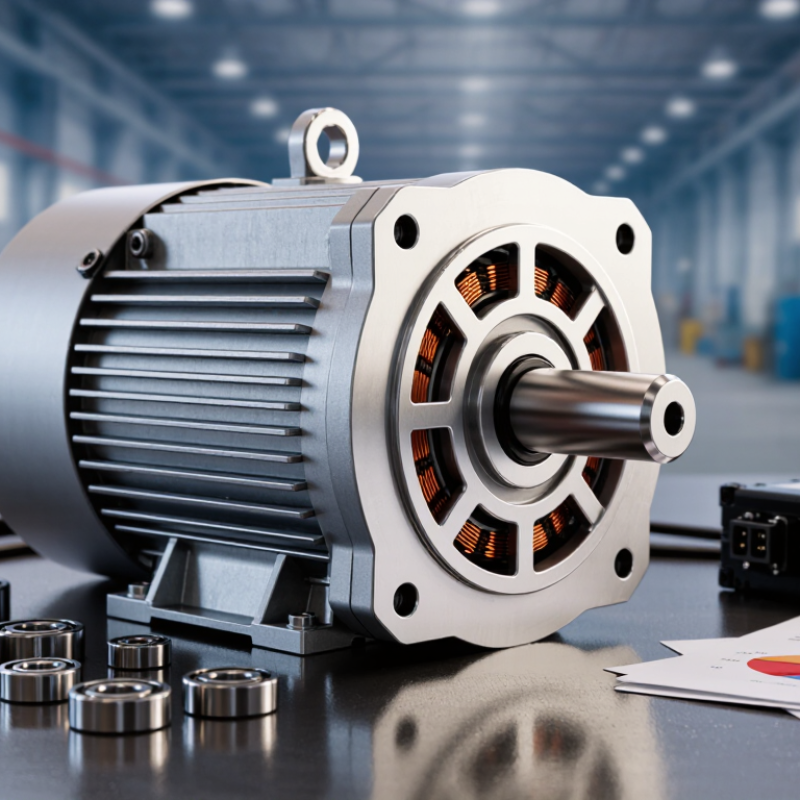
A high-performance motor is more than a large output number. It must deliver stable torque, low heat, and predictable service life. The International Energy Agency estimates motor-driven systems consume about 53% of global electricity. Small efficiency gains therefore matter. In China, serious buyers should check GB/T 18613-2020 efficiency data and alignment with IEC 60034 testing methods. IE3 is a practical baseline. IE4 is stronger for continuous-duty applications. However, efficiency claims need independent test records. A polished datasheet is not enough.
Tips: Ask for full-load efficiency, power factor, noise levels, insulation class, IP rating, and duty-cycle results. Check whether tests used 50 Hz or 60 Hz. Confirm inverter compatibility before ordering. Also inspect bearing specifications and thermal protection details. These parts often decide real operating costs.
High performance also means consistency between samples. Production-line testing should verify winding resistance, vibration, temperature rise, and no-load current. The motor should start smoothly under the stated load, not only in a showroom test. The 2021 UNEP U4E policy guidance identifies electric motors as a major global efficiency opportunity, especially in pumps, fans, compressors, and conveyors. Yet one weakness remains: buyers sometimes compare only rated efficiency. That can mislead. A motor with excellent peak figures may perform poorly under frequent starts, overloads, or variable-speed operation. Request traceable reports, sample testing, and clear warranty conditions. Reliability is measurable, but never perfectly promised.
China Best High Performance Motor for Global Buyers?
Key Motor Technologies and Performance Standards
A high-performance motor is more than a low efficiency figure. Global buyers should examine its complete operating profile. Permanent-magnet, induction, and synchronous-reluctance designs serve different loads and control systems. Permanent-magnet motors can deliver strong torque from a compact frame. Induction motors often provide dependable operation in demanding industrial environments. Synchronous-reluctance motors may reduce rotor losses, but their drive settings require careful commissioning.
Thermal design directly affects service life. Look for copper fill, insulation class, cooling method, and winding temperature data. A motor that runs beside a dusty furnace needs more than laboratory efficiency. Check the IP rating under IEC 60529, electrical performance under IEC 60034, and efficiency classification under IEC 60034-30-1. Independent test reports should show rated-load and partial-load results. One number is not enough.
Control technology also matters. Field-oriented control, accurate encoders, and regenerative braking can improve response and energy use. Ask for vibration results measured against ISO 20816 guidance. Review starting current, overload capacity, bearing design, noise, and expected duty cycle. In real installations, alignment errors and poor ventilation often reduce performance sharply. A datasheet can still mislead. Some suppliers provide excellent peak values, yet offer limited evidence for continuous operation. Buyers should request sample test records, traceable measurements, and clear warranty conditions before selecting a motor for global service.
The chart compares the minimum full-load efficiency levels defined by IEC 60034-30-1 for 4-pole, 75 kW motors. Higher efficiency classes reduce electrical losses and are commonly used when selecting high-performance motors for global industrial applications.
Reference: IEC 60034-30-1 efficiency classification. Values shown: IE1 92.1%, IE2 93.6%, IE3 95.0%, and IE4 96.0%.
Chinese high-performance motors cover several designs, each serving different operating demands. Permanent magnet synchronous motors deliver strong torque, high efficiency, and stable speed control. They suit electric vehicles, industrial pumps, compressors, and automated production lines. Brushless DC motors offer compact construction and fast response. They are common in drones, medical equipment, cooling systems, and precision machinery.
Servo motors provide accurate positioning through encoders and closed-loop controllers. They perform well in robotic arms, packaging machines, and CNC equipment. Induction motors remain practical for heavy industrial duty. Their simple structure, reliable operation, and lower maintenance needs support conveyors, fans, and large processing equipment. Switched reluctance motors can tolerate high temperatures and harsh conditions, although vibration and acoustic noise may require careful control.
Details matter.
When comparing suppliers, buyers should examine torque curves, insulation class, bearing quality, cooling methods, and overload capacity. A motor rated at high power may lose performance in a poorly ventilated enclosure. Water cooling can improve continuous output, but it adds plumbing, seals, and maintenance points. Certification documents should match the destination market, not merely the factory’s internal tests.
Real testing remains essential. Request sample units, winding data, efficiency maps, and endurance results under realistic loads. Some specifications look impressive on paper. They may change at high altitude, low voltage, or frequent starts. Engineers should also confirm shaft dimensions, mounting tolerances, controller compatibility, and spare-part availability. A faster motor is not always the better choice. Clearance, noise, and service access can quietly determine the project’s success.
China Best High Performance Motor for Global Buyers?
How Global Buyers Should Evaluate Chinese Motor Suppliers
Choosing the best Chinese high-performance motor starts with evidence, not attractive catalog language. Define the operating load, speed range, duty cycle, ambient temperature, and installation conditions. Ask for efficiency curves at your actual load, not only the rated point. Request winding-temperature data, vibration readings, insulation tests, and noise measurements from recent production. Shortcuts here become expensive later.
A credible supplier should explain its process clearly. Review incoming-material checks, rotor balancing, winding inspection, final-load testing, and traceability records. A factory visit can reveal practical details: clean assembly areas, calibrated instruments, labeled components, and controlled storage. Remote audits help, but they cannot replace every physical check. That limitation matters. Compare a production sample with the promised specification, then repeat testing through an independent laboratory when the application is critical. Ask whether test conditions match your destination’s voltage, frequency, safety rules, and environmental requirements.
Commercial reliability deserves equal attention. Confirm lead times, minimum order quantities, spare-part access, packaging strength, warranty response, and technical support hours. Put acceptance criteria in writing, including allowed temperature rise, efficiency tolerance, shaft dimensions, and inspection procedures. Do not judge capability from one successful sample. Production consistency is harder. A supplier may have excellent engineers but weak documentation, or strong documentation but limited after-sales support. Treat both as risks. I would also question unusually low prices, because copper content, bearing quality, testing time, and protective packaging rarely disappear without consequences.
A practical, brand-neutral supplier evaluation framework for industrial electric motors, based on internationally recognized specifications, verification documents, and procurement risk controls.
| Evaluation Dimension | Suggested Weight | Practical Benchmark | Evidence Global Buyers Should Request | Warning Signs |
|---|---|---|---|---|
| Efficiency Performance | 18% | Verify the declared efficiency class against IEC 60034-30-1. For many industrial applications, IE3 is the baseline and IE4 may be preferred where lifecycle energy cost is important. | Rated efficiency, power factor, current, speed, torque, and loss data at the required operating points; independent or accredited test documentation where available. | Efficiency is quoted without the test method, rated load, voltage, frequency, or tolerance information. |
| Standards and Certification | 12% | The motor design and test documentation should align with the applicable IEC 60034 requirements and the electrical regulations of the destination market. | Declaration of conformity, applicable test reports, product datasheet, dimensional drawings, and certificates relevant to the destination country. | Certificates cannot be matched to the exact model, rating, production site, or current revision of the product. |
| Electrical Design | 10% | Confirm the required voltage, frequency, connection method, starting current, rated current, speed, torque, and duty cycle. Common industrial supplies include 50 Hz and 60 Hz systems, but the exact rating must match the installation. | Nameplate sample, wiring diagram, no-load and load test records, starting-performance data, and compatibility confirmation for the intended drive or starter. | The supplier offers a standard rating without confirming the buyer’s grid conditions or application duty. |
| Thermal Performance and Insulation | 10% | Select the insulation system and temperature-rise class according to ambient temperature, installation altitude, duty cycle, overload conditions, and variable-speed operation. | Insulation class, temperature-rise data, winding resistance records, surge or withstand test records, and derating guidance for high ambient temperature or altitude. | No documented thermal margin, no variable-frequency-drive guidance, or unclear insulation details for frequent starts and stops. |
| Ingress Protection and Environment | 9% | Choose the IP rating under IEC 60034-5 according to dust, moisture, washdown, outdoor exposure, and installation conditions. IP55 is commonly used for general industrial environments, but it is not suitable for every application. | IP test information, enclosure design, drain and breather arrangement, corrosion protection details, paint specification, and environmental operating limits. | A high IP rating is promoted without explaining shaft seals, cable entry protection, condensation control, or corrosion resistance. |
| Mechanical Construction | 9% | Check frame size, mounting arrangement, shaft dimensions, bearing configuration, balancing grade, vibration limits, and compatibility with the driven equipment. | Certified dimensional drawing, shaft and keyway tolerances, bearing list, rotor-balance record, vibration test results, and mounting specification. | Critical dimensions are described as approximate, or the supplier cannot provide a controlled drawing before production. |
| Application and Duty Suitability | 9% | Match the motor to the load profile, operating hours, starts per hour, acceleration time, load inertia, torque curve, and duty designation such as continuous duty where applicable. | Application questionnaire, torque-speed curve, duty-cycle confirmation, load calculation, starting method recommendation, and written operating limits. | The supplier selects the motor only by horsepower or kilowatts without reviewing the actual load characteristics. |
| Quality Control and Traceability | 10% | A reliable production system should control incoming materials, winding processes, machining, assembly, final testing, nonconforming products, and batch traceability. | Quality-management certificate, process-control plan, inspection and test plan, serial-number policy, sample final-test report, and corrective-action procedure. | Only a general quality certificate is provided, with no model-level test records or traceability from components to finished motor. |
| Factory and Supplier Verification | 6% | The contracting entity, manufacturing location, authorized production scope, and export capability should be clearly verified before a purchase order is issued. | Business registration details, factory audit, production photographs or live video verification, equipment list, capacity information, and reference projects with confidential data removed. | The seller, factory, certificate holder, and bank-account beneficiary are inconsistent or cannot be independently verified. |
| Testing and Factory Acceptance | 7% | Define routine tests for every motor and type or performance tests when required by the specification, project, or risk level. | Pre-shipment inspection plan covering winding resistance, insulation resistance, dielectric withstand, no-load current, vibration, noise, rotation, dimensions, and nameplate data. | Testing is limited to visual inspection, or the supplier refuses buyer-witnessed testing for critical orders. |
China Best High Performance Motor for Global Buyers?
High-performance motors from China serve pumps, conveyors, compressors, machine tools, and automated production lines. Buyers should match motor design with real operating conditions, not only rated power. Check torque, duty cycle, speed control, cooling method, and starting frequency. A dusty workshop may need stronger enclosure protection than a clean indoor facility. Moisture changes the decision. Noise matters.
Export planning requires more than selecting a motor model. Confirm voltage, frequency, phase, shaft dimensions, mounting position, insulation class, and efficiency data. Request test records, material details, dimensional drawings, and a clear inspection plan. Packaging should protect bearings and terminals during long-distance transport. Ask how spare parts, technical support, and warranty claims will be handled across borders. Documentation must align with the destination market’s requirements.
Cost comparisons can be misleading. A cheaper motor may consume more energy or require earlier maintenance. Calculate expected operating hours, load variation, and service access before approving an order. Measure twice. I have seen buyers focus on peak output while ignoring frequent starts, which can shorten service life. That is risky. Supplier audits, sample testing, and third-party inspection improve confidence, although they add time and expense. No specification sheet is perfect; field conditions often reveal assumptions that engineering teams missed.
It delivers stable torque, low heat, and predictable service life. Rated power alone proves very little. Check efficiency, noise, insulation, and thermal protection.
Request full-load efficiency, power factor, and efficiency across different loads. Ask for independent test records. An attractive datasheet is not enough.
Test results can differ between 50 Hz and 60 Hz operation. Confirm voltage, frequency, phase, and inverter compatibility. Small mismatches create large problems.
Permanent magnet motors suit pumps, compressors, and automated lines. Servo motors support precise positioning. Induction motors handle conveyors and heavy equipment. Brushless motors offer compact, fast response.
Request sample testing and traceable production reports. Check winding resistance, vibration, temperature rise, and no-load current. One excellent sample is not proof.
No. Frequent starts, overloads, poor ventilation, or variable speed can reduce performance. A motor may look strong on paper but struggle in service.
Confirm shaft dimensions, mounting tolerances, bearing specifications, enclosure protection, and cooling arrangements. Packaging should protect bearings and terminals during transport. Details matter.
Estimate energy use, operating hours, load changes, maintenance, and service access. A cheaper motor may cost more over time. Measure twice.
Dusty or damp workshops may need stronger enclosure protection. Review insulation, cooling, seals, and thermal limits. Noise matters. Field conditions often expose missed assumptions.
China has become an important source of high-efficiency motor solutions for global industrial and commercial applications. A High Performance Motor is defined by more than rated power; it should deliver strong efficiency, stable torque, precise control, low heat generation, long service life, and reliable operation under demanding conditions. Key technologies may include advanced electromagnetic design, high-quality insulation, efficient cooling systems, precision manufacturing, variable-frequency compatibility, and intelligent monitoring. Performance should also be assessed through recognized testing methods, energy-efficiency ratings, protection levels, and operational reliability.
Chinese manufacturers offer various motor types, including induction motors, permanent-magnet motors, servo motors, and specialized solutions for pumps, fans, compressors, automation equipment, transportation systems, and renewable-energy projects. Global buyers should evaluate suppliers based on technical capability, quality-control procedures, customization support, documentation, production consistency, delivery capacity, after-sales service, and compliance with destination-market requirements. Careful comparison of specifications, testing reports, total operating cost, export experience, and long-term support can help buyers select a dependable motor solution for their specific application.

KINOV Motor