China Top 10 Variable Speed Motor Manufacturers

Time:2026-09-22 Author:Amelia
0%

China has become a major manufacturing hub for industrial motion-control equipment. Its Variable Speed Motor manufacturers serve factories, water plants, conveyors, compressors, machine tools, and renewable-energy systems. This guide introduces ten notable Chinese companies connected with this competitive field.

The selection considers product range, motor efficiency, inverter compatibility, customization, certifications, and after-sales support. It also examines practical details, including voltage options, enclosure protection, cooling methods, noise levels, and operating environments. These factors matter when a motor runs continuously beside a production line or inside a dusty pump room.

Real-world performance matters most.

Company experience can reveal more than a polished catalogue. We look for evidence of export activity, engineering capability, testing procedures, and documented quality management. However, public information is not always complete. Some manufacturers present impressive specifications without explaining long-term service performance. That limitation deserves attention.

Buyers should compare rated torque, speed control range, insulation class, bearing quality, and integration with modern drives. Energy savings may look attractive, yet incorrect sizing can increase heat, vibration, and maintenance costs. A reliable supplier should provide technical drawings, test data, clear warranties, and responsive communication.

This overview is not a permanent verdict. Market positions change, product lines develop, and regional service quality may differ. Instead, it offers a practical starting point for engineers, distributors, and procurement teams evaluating Chinese suppliers. Each manufacturer deserves independent verification before a purchase decision. The strongest choice is rarely the cheapest quotation.
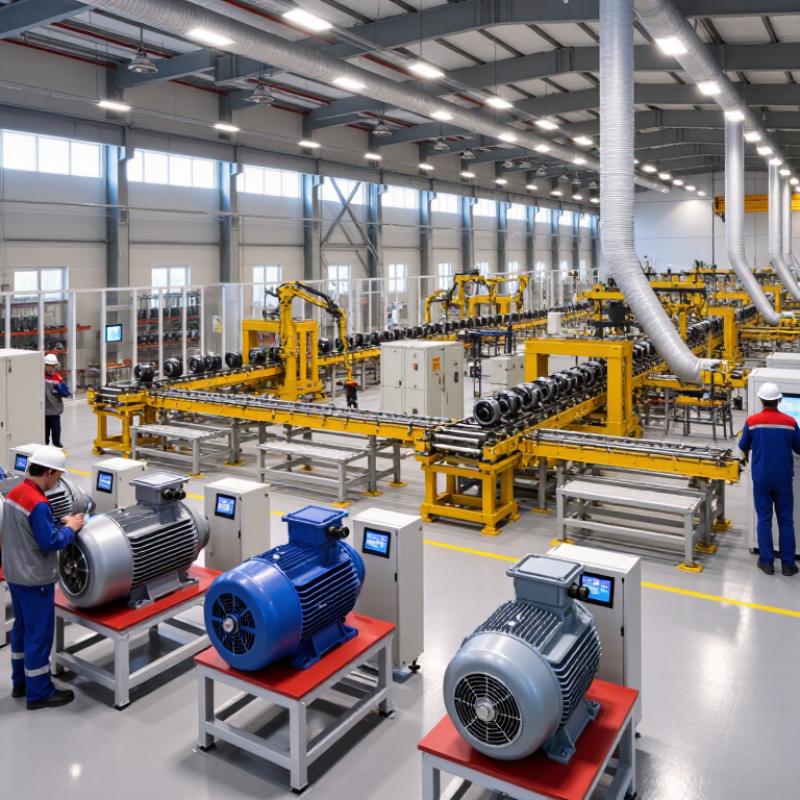
China Top 10 Variable Speed Motor Manufacturers

Definition and Role of Variable Speed Motors in Modern Industry

A variable speed motor adjusts rotational speed to match the load. It usually works with an inverter or drive. This differs from a fixed-speed motor, which runs near one operating point. In modern industry, speed control supports precise conveyor movement, stable pump pressure, and gentler fan operation. It also limits starting current and reduces mechanical stress.

Energy impact can be substantial. The International Energy Agency’s Energy Efficiency 2024 report states that electric motor systems consume roughly half of global electricity. The U.S. Department of Energy reports that properly selected variable-speed controls can deliver 20% to 50% savings in suitable pumping and fan applications. These figures are not promises. Efficiency depends on duty cycle, motor sizing, control settings, and maintenance. An oversized drive can add losses. In factory assessments, measured load profiles are more dependable than catalog estimates. The calculation is rarely perfect. Professional commissioning still matters.

Tips: Record speed, torque, flow, and operating hours before selecting equipment. Match the motor and drive as a tested system. Check harmonics, cooling, enclosure protection, and emergency-stop requirements. Review monthly energy data after installation. If savings disappoint, inspect sensors and control logic before blaming the motor. Small errors matter.

China Top 10 Variable Speed Motor Manufacturers - Definition and Role of Variable Speed Motors in Modern Industry

Technical comparison of major variable-speed motor technologies commonly supplied for modern industrial applications

Variable speed motors are electric motors operated across a controlled speed range, typically through a variable frequency drive, inverter, servo drive, or other electronic controller. The table below compares ten widely used motor categories and their typical industrial roles without listing company or brand information.

Variable Speed Motor Technology and Application Comparison
No. Motor Technology Typical Speed-Control Method Typical Power Range Speed Capability Key Advantages Common Industrial Applications Main Selection Consideration
1 Squirrel-Cage Induction Motor Variable frequency drive with voltage and frequency control Approximately 0.12 kW to several MW Usually 10% to 100% of rated speed; wider ranges with feedback Robust construction, broad availability, low maintenance, and strong cost efficiency Pumps, fans, compressors, conveyors, mixers, and general-purpose machinery Low-speed cooling, torque requirements, drive compatibility, and overload duty
2 Permanent Magnet Synchronous Motor Field-oriented inverter control, commonly with position feedback Approximately 0.1 kW to several hundred kW Wide constant-torque and constant-power ranges, depending on design High efficiency, high power density, and strong torque at low speed Efficient pumps, compressors, elevators, traction systems, and precision machinery Higher initial cost, magnet temperature limits, and drive complexity
3 Brushless DC Motor Electronic commutation using a dedicated controller Typically a few watts to approximately 100 kW Broad variable-speed range with suitable feedback and control tuning Compact size, high efficiency, low mechanical wear, and fast dynamic response Small pumps, fans, automation equipment, medical devices, and light electric vehicles Controller design, electromagnetic noise, cooling, and feedback requirements
4 Servo Motor Closed-loop servo drive with encoder or resolver feedback Approximately 50 W to several hundred kW Very wide range with precise speed, position, and torque control High acceleration, accurate positioning, rapid response, and repeatability Robotics, CNC equipment, packaging machines, printing, and semiconductor systems Total system tuning, feedback resolution, inertia matching, and duty cycle
5 Synchronous Reluctance Motor Variable frequency drive with rotor-position-oriented control Approximately 1 kW to several hundred kW Broad operating range with drive-based speed regulation No rotor magnets, reduced rotor losses, and good part-load efficiency Industrial pumps, fans, compressors, conveyors, and energy-conscious production lines Drive coordination, starting performance, acoustic noise, and control settings
6 Switched Reluctance Motor Electronic phase switching using a position-sensing controller Approximately 0.1 kW to several hundred kW Very wide speed range, including high-speed operation in suitable designs Simple rotor, high-temperature tolerance, and strong fault resistance Pumps, appliances, traction auxiliaries, industrial drives, and high-speed equipment Torque ripple, acoustic noise, controller quality, and system optimization
7 Wound-Rotor Induction Motor External rotor-resistance control or modern variable frequency drive Typically tens of kW to several MW Suitable for adjustable speed and high starting-torque duties High starting torque and controllable acceleration for heavy loads Cranes, hoists, mills, crushers, conveyors, and large process machinery Brush and slip-ring maintenance, energy loss, and enclosure requirements
8 Separately Excited DC Motor Controlled armature voltage and field-current regulation Approximately 0.5 kW to several MW Wide speed range with strong low-speed torque capability Straightforward torque control and proven variable-speed performance Legacy rolling mills, elevators, test stands, and specialized industrial machinery Brush and commutator wear, maintenance intervals, and replacement availability
9 Axial-Flux Permanent Magnet Motor Inverter-based vector control with optional position feedback Generally a few hundred watts to several hundred kW Wide range, subject to thermal and mechanical design limits Flat form factor, high torque density, and efficient direct-drive potential Compact machinery, mobility systems, robotics, and space-constrained equipment Thermal management, manufacturing complexity, mechanical alignment, and cost
10 Linear Motor Linear servo drive with position and velocity feedback From small precision systems to hundreds of kW in specialized equipment Direct linear motion; speed is specified in m/s rather than rpm High acceleration, no mechanical screw or gearbox, and precise positioning Machine tools, semiconductor handling, transport systems, and automated inspection Air gap control, heat dissipation, magnetic forces, and installation accuracy
Data note: Power ranges and speed ranges are representative engineering ranges rather than fixed limits. Actual ratings depend on motor frame size, cooling method, duty class, insulation system, controller, load profile, and applicable IEC or NEMA requirements.

China’s Variable Speed Motor Manufacturing Landscape

China’s variable speed motor manufacturing landscape is broad, export-oriented, and increasingly focused on efficient motor systems. The International Energy Agency’s 4E Motor Systems Annex reports that motor-driven systems consume about half of global electricity. This pressure is reshaping Chinese production lines.

Manufacturers now combine permanent-magnet motors, induction motors, variable frequency drives, and digital monitoring. China’s industrial supply chain offers dense access to copper, electrical steel, controllers, machining, and testing services. The China Electrical Equipment Industrial Association has repeatedly highlighted efficiency upgrades and intelligent manufacturing as major sector priorities. However, capacity does not always equal consistency. Testing depth, bearing quality, thermal design, and after-sales support can vary between suppliers. A factory photograph proves little.

A practical Top 10 assessment should compare verified efficiency data, load-range performance, insulation systems, vibration results, delivery history, and certification records. The U.S. Department of Energy notes that variable-speed control can reduce fan and pump energy use substantially, especially under changing loads. Real savings depend on system design, not motor claims alone. This point is often overlooked.

Tips: Request test reports at several speeds, not only rated speed. Check whether efficiency data follows IEC 60034-2-1 methods. Ask for sample units, factory audit access, spare-part plans, and clear warranty terms. Keep records. A low purchase price may become expensive after installation.

China’s Variable Speed Motor Manufacturing Landscape

Typical operating-speed ranges by major variable-speed motor application in China’s industrial market. Actual operating points vary by motor design, inverter settings, load profile, and system requirements.

The comparison highlights how application requirements influence motor selection: machine tools generally require the widest speed range, while pumps and HVAC systems typically operate within narrower ranges.

Selection Criteria for the Top 10 Chinese Manufacturers

China Top 10 Variable Speed Motor Manufacturers

Selection Criteria for the Top 10 Chinese Manufacturers

A credible top-ten list begins with measured performance, not catalogue claims. The International Energy Agency estimates that motor-driven systems consume roughly 46% of global electricity. Therefore, efficiency deserves more weight than purchase price. I would examine tested efficiency across realistic load points, especially at 25%, 50%, and 75% speed. IEC 60034-30-1 efficiency classes provide a useful comparison framework. However, ratings alone can mislead. A motor’s actual savings depend on load profile, control settings, ventilation, and maintenance.

Factory evidence matters. Selection should include independent test reports, traceable serial records, thermal testing, vibration limits, and documented quality procedures under ISO 9001. The U.S. Department of Energy’s Motor Systems guidance recommends evaluating the complete motor-and-drive system, rather than the motor separately. This means checking harmonic performance, electromagnetic compatibility, braking response, and overload capacity. Ask for field data from pumps, fans, compressors, and conveyors. Real installations reveal more.

Cost should include service life. The U.S. DOE notes that electricity commonly dominates a motor’s lifetime cost. Warranty length, spare-part availability, repair capability, export documentation, and response time deserve clear scoring. I would also verify production capacity through an audit, not photographs. No ranking is flawless. Some manufacturers publish incomplete test conditions, making comparisons uncertain. That weakness should be disclosed, not quietly ignored.

Profiles of China’s Top 10 Variable Speed Motor Manufacturers

China’s top ten variable speed motor manufacturers serve factories, pumps, conveyors, fans, and machine tools. Their profiles reveal different strengths rather than one universal leader. Several focus on compact induction motors for general automation. Others develop permanent magnet designs for lower energy use and quieter operation.

One manufacturer profile may highlight high-volume production and automated winding lines. Another may emphasize customized shafts, brakes, or encoder mounting. Some provide motors from fractional kilowatt ratings to heavy industrial capacities. Their workshops commonly use balancing machines, insulation testers, thermal cameras, and load benches. These details matter during supplier evaluation.

Certification documents are useful, but they do not replace practical verification. Buyers should review test reports, efficiency data, bearing choices, and stated duty cycles. A factory may offer excellent performance, yet weak documentation can slow installation. The reverse also happens. A polished catalog may hide limited experience with unusual loads. Engineers should request sample testing under real voltage, speed, temperature, and vibration conditions. Delivery records and after-sales response deserve equal attention. No profile is complete without them. In my view, the strongest manufacturers remain transparent about tolerances, service limits, and occasional design compromises.

Applications, Standards, and Future Trends in the Chinese Market

China Top 10 Variable Speed Motor Manufacturers

Variable speed motors support pumps, fans, conveyors, compressors, machine tools, and HVAC systems across China. Their speed control can reduce energy use when loads change during operation. In wastewater plants, a motor may slow during low-flow periods. On a production line, precise acceleration protects belts and mechanical parts.

Chinese buyers should check GB/T requirements, applicable IEC 60034 standards, and China Compulsory Certification where required. Energy efficiency also deserves attention. GB 18613 provides a useful reference for motor efficiency levels in many industrial applications. However, compliance documents alone cannot prove reliable performance. Field testing should examine vibration, temperature rise, insulation quality, noise, and inverter compatibility. A motor rated for variable-frequency operation needs suitable bearings and cooling design.

Tips: Match the motor, drive, load profile, and duty cycle together. Ask for test reports and clear warranty terms. Check low-speed torque before purchase. This step is often missed.

Future Demand and Technology Trends

Future demand will favor IE3 and IE4 efficiency, sensorless vector control, embedded temperature monitoring, and predictive maintenance. Digital platforms may identify bearing wear before production stops. Compact permanent-magnet designs could grow in elevators, fans, and precision equipment. Yet rare-earth material costs and electronic supply risks remain concerns. Smaller manufacturers may also struggle with software support. That deserves honest evaluation. Manufacturers that combine tested hardware, responsive service, and transparent data will gain stronger trust in China’s changing market.

FAQS

What is a variable speed motor?

It changes rotational speed to match the machine’s workload. It usually operates with an electronic drive. A fixed-speed motor stays near one operating point.

Where are variable speed motors commonly used?

They support conveyors, pumps, fans, and machine tools. A conveyor can move gently instead of stopping abruptly. Pumps can maintain steadier pressure. Fans can avoid unnecessary high speed.

How much energy can variable speed control save?

Suitable fan and pump systems may save about 20% to 50% energy. These figures are not guarantees. Savings depend on load patterns, motor sizing, settings, and maintenance.

What information should be collected before choosing a motor?

Record speed, torque, flow, and operating hours. Measure these values across normal production periods. Catalog estimates can mislead. Measured load profiles are better.

What should buyers check when comparing suppliers?

Request efficiency results at several speeds, not only rated speed. Review vibration, insulation, bearing quality, cooling, and enclosure protection. A factory photograph proves little.

Do certificates and catalogs prove motor quality?

No. Documents help, but practical testing remains necessary. A polished catalog may hide weak experience with unusual loads. The opposite can happen, too.

How can a motor and drive be evaluated as a system?

Test them under real voltage, speed, temperature, and vibration conditions. Check harmonics, emergency-stop needs, thermal behavior, and control response. Matching matters.

Why might expected energy savings fail to appear?

Inspect sensors, control logic, speed settings, and operating hours first. An oversized drive may add losses. Small errors matter. The original estimate may simply be wrong.

Conclusion

This article presents a practical overview of the Variable Speed Motor industry in China, explaining how these motors regulate rotational speed to improve energy efficiency, process accuracy, equipment protection, and production flexibility. It examines their growing role in modern industrial systems, including manufacturing, water treatment, ventilation, material handling, and other applications that require precise and responsive motor control. The article also describes China’s manufacturing landscape, highlighting the importance of engineering capabilities, production capacity, product reliability, customization, service support, and quality management.

Based on these criteria, the article introduces ten representative Chinese manufacturers without focusing on brand promotion, while outlining the features that distinguish strong suppliers in a competitive market. It further reviews common applications, relevant safety and performance standards, testing expectations, and purchasing considerations. Finally, the article discusses future trends such as intelligent control, integrated drive systems, energy-saving technologies, digital monitoring, and the continued development of efficient and adaptable motor solutions for global industrial needs.

Amelia

Amelia

Amelia is a seasoned marketing professional with a wealth of expertise in our company’s core offerings. With an unwavering passion for driving growth and innovation, she plays a pivotal role in shaping our marketing strategies and enhancing brand visibility. A key aspect of her responsibilities......