How to Choose the Right Rotary Motor for Your Application?

Time:2026-11-07 Author:Sophia
0%

Choosing the right Rotary Motor is not just a matter of matching horsepower. The motor must suit the load, operating speed, duty cycle, and installation environment. A mismatch can cause excess heat, vibration, noise, or energy use. Small details matter.

The U.S. Department of Energy’s 2014 sourcebook, Improving Motor and Drive System Performance, estimates that motor-driven systems use about 70 percent of industrial electricity in the United States. That figure covers many kinds of industrial motor systems, not rotary motors alone. Still, it shows why selection deserves careful attention. A small efficiency difference can matter when equipment runs for long shifts.

Start with the actual application. Record the required torque and speed, including startup demands and likely load changes. Then check the power supply, mounting space, ambient temperature, and exposure to dust or moisture. A pump may need steady rotation, while a conveyor may face frequent starts and changing loads. These differences can alter the right motor and drive combination. There is no perfect shortlist without measured operating conditions.

Compare rated output, efficiency, allowable speed range, and maintenance needs using manufacturer data. Confirm that the ratings match the intended duty, rather than relying on peak values alone. A practical review should also consider the cost of controls, installation, and downtime. The cheapest option may not stay cheapest. Yet estimates can miss real-world variation, so verify assumptions with application measurements before purchasing.
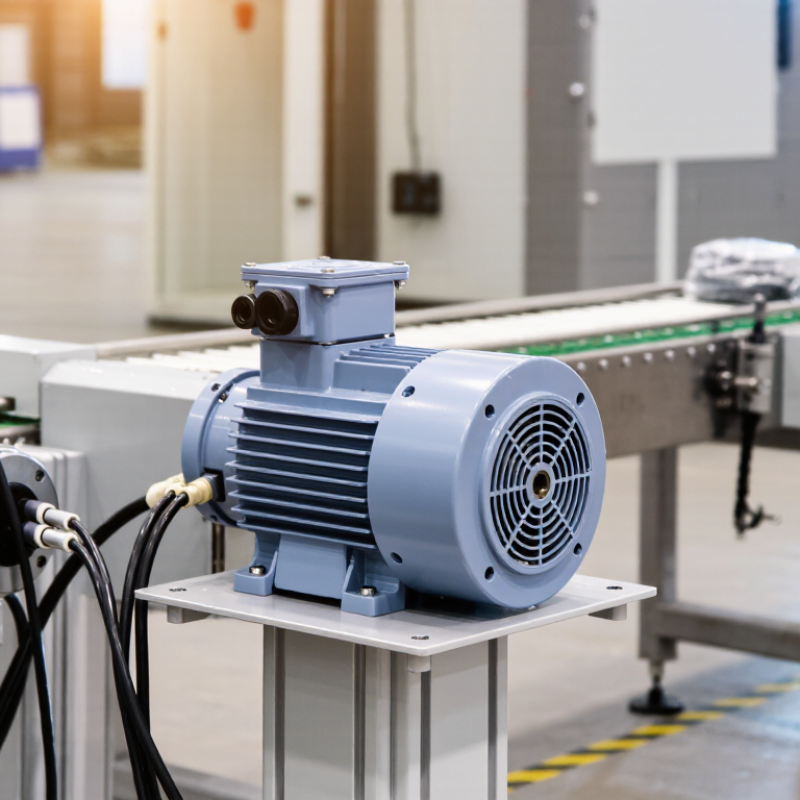
How to Choose the Right Rotary Motor for Your Application?

Define the Application’s Motion and Performance Requirements

Start by describing the motion the motor must produce. Does the shaft rotate continuously, move between fixed angles, or start and stop repeatedly? Note the required speed, travel angle, acceleration, and stopping time. A turntable may need smooth, steady rotation, while a feeder may need brief, precise movements. These details shape the motor choice.

Next, define performance under real load. Estimate the torque needed to move the mechanism, including friction and the weight of connected parts. Record the duty cycle, or how often the motor runs and rests, along with any position accuracy requirements. A motor that meets a peak-torque figure may still overheat during frequent cycles. Check the available space, power supply, and operating temperature, too. Early estimates are rarely perfect; measure the actual load where possible, then revise them.

Tips: Test the motor with the real mechanism, not just an unloaded shaft. Watch for slow starts, missed positions, excess heat, and vibration. Small problems matter. A short trial can reveal assumptions that a datasheet cannot.

Identify the Rotary Motor Types Suitable for the Task

Choose a motor by the movement it must produce, not by its label alone. Stepper motors suit repeatable positioning at modest speeds, such as turning a small indexing table one fixed angle at a time. They can hold position without a separate brake, but may lose steps under excessive load. That detail matters.

Servo motors use feedback to correct position or speed as conditions change. They fit robotic joints, packaging equipment, and other tasks needing controlled movement under varying loads. Check encoder resolution, peak torque, and operating speed together; a high torque rating alone can mislead. For simpler speed control, brushed or brushless DC motors are common options. Brushless designs generally need an electronic controller, while brushed motors are simpler but require attention to brush wear.

For long, steady operation, an AC induction motor may be a practical choice, especially when precise positioning is unnecessary. Pneumatic rotary motors work well where compressed air is available and quick rotation matters; hydraulic types can deliver high torque in demanding machinery. They also require suitable air or fluid systems. There is no perfect shortlist. Compare the real load, start-stop frequency, available power, mounting space, and surrounding heat or dust. A motor that works on a test bench may behave differently after hours of cycling, so leave room for measured adjustments.

Compare Torque, Speed, Power, and Control Specifications

Choosing a rotary motor starts with the load, not the catalog’s largest power rating. Record required torque at startup and during steady operation, plus the load’s speed range and duty cycle. Power links torque and speed: P = T × angular speed. A motor may meet the speed target yet stall when a heavy load accelerates. Include inertia, friction, and any gearbox losses in your estimate. The U.S. Department of Energy’s 2014 United States Industrial and Commercial Motor System Market Assessment Report found motor systems used about 54% of U.S. manufacturing electricity. Efficient sizing matters.

Compare continuous and peak torque ratings, not just nominal power. Check whether the motor can hold torque at your operating speed; many motors deliver less torque as speed rises. Then review control requirements. Open-loop control may suit a simple conveyor, while precise positioning often needs feedback and a suitable drive. Specify acceleration, braking, and speed stability. A little margin helps, but excessive oversizing can waste energy and money. The calculation is useful, though real loads rarely behave perfectly.

Tips: Test the motor under the actual load if possible. Watch temperature during repeated starts. Confirm the controller matches the motor’s voltage, current, and feedback needs. Keep notes; one assumption may be wrong.

Evaluate Environmental Conditions and System Compatibility

Environmental checks should start at the machine, not the catalog page. Record ambient temperature, altitude, moisture, dust, washdown exposure, and vibration near the mounting point. IEC 60034-1:2022 bases standard operating conditions on ambient air up to 40°C and altitudes up to 1,000 metres. Conditions beyond these limits may require derating or a motor rated for the environment. A unit beside a heated enclosure can run hotter than the room thermometer suggests. Small detail, real consequence.

Check compatibility across the complete drive system: supply voltage, controller, torque, speed range, load inertia, shaft dimensions, mounting, feedback, and duty cycle. Match the torque-speed curve to the actual load, not just the motor’s headline power. The U.S. Department of Energy’s Improving Motor and Drive System Performance sourcebook estimates that motor-driven systems use about 68% of U.S. manufacturing electricity. Poor matching can therefore waste significant energy. Request derating curves for heat or altitude, and verify protection against the actual cleaning method. Leave room for startup loads, but avoid guessing. Measure a real operating cycle; oversized equipment can also be inefficient.

How to Choose the Right Rotary Motor for Your Application? - Evaluate Environmental Conditions and System Compatibility
Evaluation Area What to Check Practical Selection Guidance Compatibility Risk if Overlooked
Ambient temperature Expected minimum and maximum temperature at the motor, including heat from nearby equipment. Compare the full operating range with the motor’s rated ambient-temperature range. Allow for reduced output or additional cooling if required by the manufacturer. Overheating, reduced service life, or failure to start in cold conditions.
Dust and water exposure Whether the motor will encounter dust, splashing, water jets, or temporary immersion. Choose an enclosure with an appropriate IEC 60529 IP rating. For example, IP54 provides dust protection and protection against splashing water; IP65 is dust-tight and protected against water jets. Check the exact test conditions and installation requirements. Ingress can damage insulation, bearings, connectors, or feedback devices. An IP rating does not by itself establish suitability for every washdown or immersion condition.
Humidity and condensation High humidity, temperature changes, and periods when the motor is idle or unpowered. Confirm whether anti-condensation heaters, sealed connectors, or a suitable storage and operating procedure are needed. Moisture can lead to corrosion, insulation deterioration, or electrical tracking.
Corrosive or hazardous surroundings Exposure to salt spray, cleaning chemicals, solvents, oils, or potentially explosive atmospheres. Verify the compatibility of housing materials, coatings, seals, and cables with the specific substances present. For hazardous locations, select equipment approved for the applicable classification and regulations. Material degradation, seal failure, or use of equipment unsuitable for the classified area.
Altitude and cooling Installation elevation, airflow, enclosure ventilation, and nearby heat sources. Check the motor and drive manufacturer’s altitude and cooling limits. Above the specified reference conditions, output or thermal capacity may require derating. Insufficient cooling can cause the motor or drive to exceed its temperature limits.
Vibration and mechanical shock Machine vibration, impact loads, mounting rigidity, and alignment of the driven equipment. Compare expected vibration and shock with the motor’s documented limits. Use a suitable mounting arrangement and avoid transmitting excessive radial or axial loads to the shaft. Premature bearing wear, loose connections, encoder faults, or shaft damage.
Power supply and drive Supply voltage, phase, frequency, available current, drive type, and control interface. Match the motor to a compatible drive and supply. Confirm electrical ratings, feedback requirements, wiring, grounding, and protection settings. Incorrect operation, nuisance trips, poor control, or damage to the motor or drive.
Torque, speed, and load inertia Required continuous and peak torque, operating speed, acceleration, deceleration, and load inertia. Size the motor using the application’s actual load profile. Check both continuous thermal limits and peak torque limits, as well as the drive’s current capacity. Stalling, excessive heating, unstable motion, or inability to meet cycle-time requirements.
Duty cycle and operating pattern Run time, starts and stops per hour, reversing frequency, and time spent at each load. Compare the complete duty cycle with the motor’s rated duty and thermal limits. Use the manufacturer’s sizing method for intermittent or frequently reversing applications. Thermal overload or reduced life even when average load appears acceptable.
Mounting and shaft interface Mounting position, flange or foot dimensions, shaft diameter, key or coupling, and allowable shaft loads. Confirm mechanical dimensions and load limits against the machine design. Check alignment and whether a brake or gearbox is required. Installation difficulties, coupling wear, misalignment, or excessive bearing loads.
Feedback and control needs Required positioning accuracy, speed regulation, encoder or resolver feedback, and braking behavior. Ensure the motor’s feedback device and brake options are supported by the controller and drive, including connector and signal compatibility. Loss of positioning accuracy, control faults, or an inability to hold the load safely when stopped.

Verify the Motor Choice Through Testing and Operating Costs

A motor that meets the torque rating on paper may still struggle in daily operation. Check the required speed, starting torque, load inertia, and duty cycle before selecting a model. Then test it with the actual mechanism, including its gearbox, coupling, and expected load. Record current draw, temperature, vibration, and cycle time. Small changes in alignment can affect results.

Tips: Test at normal and peak load. Log readings after the motor reaches operating temperature. Leave room for a safety margin; one short test may miss a real operating problem.

Compare more than purchase prices. Estimate energy use from measured power draw and expected operating hours. Include maintenance, replacement intervals, and the cost of unplanned downtime. A slightly less efficient motor might still cost less overall if it handles the load reliably and needs fewer service visits. Bench tests cannot reproduce every jam, temperature swing, or installation flaw. That is worth remembering. Recheck performance after installation, and revise the choice if measured costs or temperatures differ from your estimates.

How to Choose the Right Rotary Motor for Your Application?

Verify motor selection with load testing and estimated operating costs.

Example test scenario: Candidate motors are tested at the same required shaft speed and load. The chart uses example measured input powers of 0.42, 0.31, and 0.38 kW, respectively. Annual electricity cost is calculated as input power × 2,000 operating hours × $0.15/kWh. These illustrative figures are not product specifications; use measurements from your own application. Before choosing, confirm torque, speed, temperature, and repeatability throughout the duty cycle, then compare energy use and maintenance costs.

FAQS

Which motor works best for repeatable, fixed-angle positioning?

A stepper motor suits modest-speed tasks, such as rotating an indexing table by one set angle. It can lose steps under excessive load.

When should I choose a servo motor?

Choose one when movement needs feedback-based correction under changing loads. Check encoder resolution, peak torque, and operating speed together.

What should I consider when choosing a basic speed-control motor?

Brushed DC motors are simpler, but their brushes wear. Brushless motors generally need an electronic controller. Small detail, real consequence.

Are induction, pneumatic, and hydraulic motors suited to different jobs?

Induction motors suit steady operation without precise positioning. Pneumatic motors need compressed air; hydraulic motors can provide high torque. Check system needs.

Which environmental details should I measure before selecting a motor?

Record heat, altitude, moisture, dust, washdown exposure, and vibration near the mounting point. A hot enclosure can change the picture.

What temperature and altitude conditions may require extra care?

Standard conditions include ambient air up to 40°C and altitudes up to 1,000 metres. Beyond these, derating or a suitable motor rating may be needed.

How can I check whether a motor fits the complete drive system?

Match supply voltage, controller, torque, speed, inertia, shaft, mounting, feedback, and duty cycle. Compare the torque-speed curve with the real load.

How can I avoid an inefficient or unreliable motor choice?

Measure an actual operating cycle, including startup loads. Oversizing can waste energy, while undersizing may struggle. I would still test it under real conditions.

Conclusion

Choosing the right Rotary Motor begins with a clear understanding of the application’s motion and performance requirements. Consider how far and how often the load must rotate, the required positioning accuracy, and whether the motor needs to start, stop, or change direction frequently. These details help narrow the options to motor types suited to the task.

Next, compare torque, speed, power, and control capabilities against the demands of the load, allowing for expected operating conditions rather than relying on ideal figures alone. Check that the motor can withstand the surrounding temperature, moisture, dust, and vibration, and that it fits the system’s available power, mounting space, and control setup. Before finalizing the choice, test the motor in realistic conditions to confirm reliable performance. Also consider efficiency, maintenance needs, and expected operating costs over time, since a suitable motor should meet both immediate requirements and long-term system goals.

Sophia

Sophia

Sophia is a dedicated marketing professional with an exceptional depth of knowledge about her company's products and services. With a keen understanding of market trends and customer needs, she crafts insightful blog posts that not only inform but also engage readers, enriching the company’s online......