Choosing an Electrical Motor for global procurement is not simply a price decision. It is a reliability decision made across factories, climates, currencies, and standards.
Nikola Tesla, a pioneer of alternating-current motor technology, once said, “The present is theirs; the future, for which I really worked, is mine.” His words still challenge procurement teams today. A motor selected for tomorrow should support efficient production, stable maintenance, and changing energy requirements. Buyers must examine rated voltage, frequency, efficiency class, insulation, IP protection, and thermal performance. A 400V motor may suit one plant, while another requires 690V operation. Small mismatches can create costly delays.
Global sourcing can provide wider supplier access, stronger technical options, and more competitive total ownership costs. However, the cheapest quotation may hide weaker bearings, unclear documentation, or limited after-sales support. That risk is real. It deserves attention.
Experienced buyers compare test certificates, delivery records, spare-parts availability, and factory quality controls. They also confirm whether the supplier understands IEC requirements and local installation conditions. Humid coastal sites may need better corrosion protection. Dusty workshops may require stronger enclosure ratings. These details matter.
Still, no procurement model is perfect. Forecasts change, shipping schedules slip, and specifications sometimes remain incomplete. A dependable decision therefore combines engineering review with supplier verification. The best Electrical Motor is not merely the one that runs today. It is the one supported by credible data, practical service, and a procurement strategy built for real operating conditions.
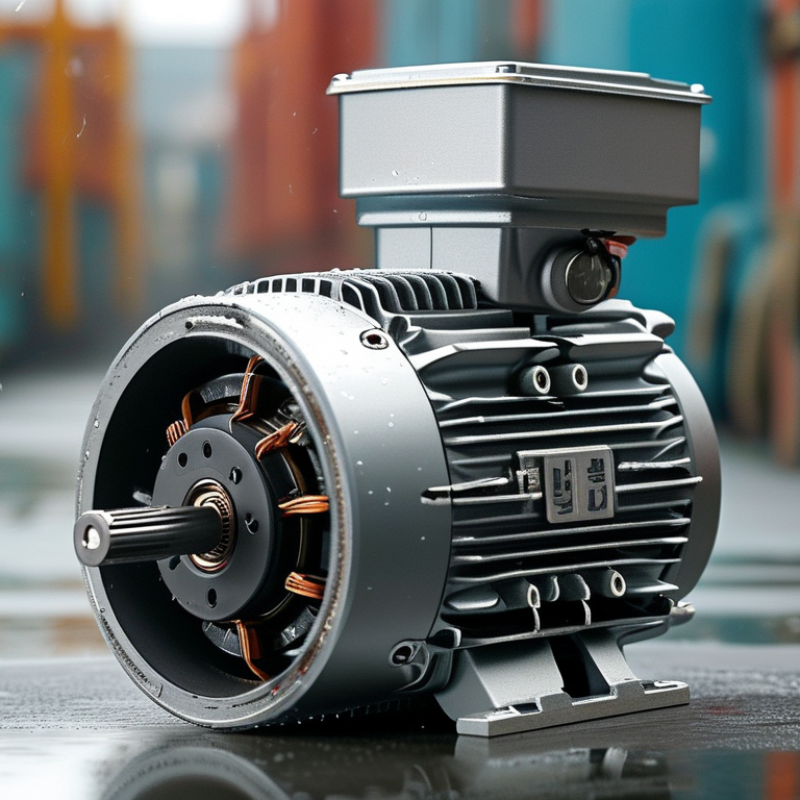
An electrical motor converts electrical energy into mechanical motion. Inside, a stationary stator creates a rotating magnetic field. This field pulls or pushes the rotor, which connects to a shaft. As the rotor follows the field, torque turns the shaft. In AC motors, alternating current produces the changing magnetic pattern. In DC motors, electronic controls or a commutator manage current direction. The basic principle is simple. The real machine is less simple. Heat, friction, vibration, and changing loads affect performance every day.
For global procurement, understanding this process helps buyers compare suitable specifications. Voltage, frequency, rated power, speed, torque, enclosure protection, and duty cycle all matter. A motor for a dusty workshop may need stronger sealing. A conveyor lifting heavy goods needs starting torque, not only high efficiency. Installation conditions also influence cable size, cooling, and controller selection. A common mistake is choosing by horsepower alone. That shortcut can cause overheating, noise, or early bearing wear. I would verify test data, drawings, certificates, and service requirements before approval. Specifications can look perfect on paper, yet perform differently onsite.
Tips: Ask for load profiles, insulation details, protection ratings, and temperature limits. Check whether local power conditions match the motor design. Request clear maintenance intervals and replacement-part information. If the application is uncertain, arrange a practical load test. Small details matter.
Why Choose an Electrical Motor for Global Procurement?
Electrical motors are essential to global procurement because they convert purchased energy into dependable mechanical work. In factories, ports, water systems, and processing lines, motors drive pumps, fans, conveyors, and compressors. A failed motor can stop an entire production cell. That cost extends beyond the replacement part. It may include delayed shipments, idle workers, and spoiled materials.
Experienced buyers assess more than purchase price. They compare rated power, voltage, frequency, enclosure protection, insulation class, duty cycle, and service access. A motor selected for one grid may perform poorly on another. Clear datasheets reduce that risk. Independent testing, traceable certificates, and documented quality checks support reliable decisions. International standards, customs requirements, and local energy rules must be reviewed before ordering. Small details matter. A connector, mounting dimension, or missing manual can delay installation for days.
Electrical motors also support long-term efficiency goals. High-efficiency designs can reduce operating costs when they run for thousands of hours. However, efficiency claims require operating conditions, not attractive numbers alone. Procurement teams should request test methods and realistic load data. In practice, the cheapest motor is not always economical. A maintenance review may reveal that low-cost choices create repeated downtime. The process is imperfect. A stronger approach includes spare-part planning, supplier audits, lifecycle costing, and regional technical support. A complete-looking specification can still hide a costly mismatch.
| Procurement Dimension | Relevant Data | Global Procurement Value | Practical Purchasing Consideration |
|---|---|---|---|
| International Power Compatibility | Common industrial supplies include 50 Hz and 60 Hz systems, with low-voltage motor designs commonly available for approximately 200–240 V, 380–415 V, 440–480 V, and 575–600 V applications. | Supports deployment across multiple electrical markets without changing the basic motor platform. | Specify rated voltage, frequency, phase, connection method, starting current, and allowable voltage variation before ordering. |
| Motor Technology | Three-phase squirrel-cage induction motors are widely used for pumps, fans, compressors, conveyors, and machine tools because they have a robust rotor and no brushes or slip rings. | Provides a broadly available solution with established maintenance practices and a large international supply base. | Confirm load profile, starting torque, duty cycle, ambient temperature, and required speed control. |
| Energy Efficiency | International efficiency classifications commonly include IE1, IE2, IE3, and IE4 under IEC 60034-30-1. IE3 and IE4 motors generally reduce operating losses compared with lower-efficiency classes. | Lower electrical losses can reduce total cost of ownership, especially in continuously operating equipment. | Compare efficiency at the actual operating load rather than relying only on the nameplate efficiency class. |
| Operating Speed | For a 50 Hz supply, common four-pole induction motors have a synchronous speed of 1,500 rpm and a loaded operating speed typically below that value. For 60 Hz, the corresponding synchronous speed is 1,800 rpm. | Offers predictable speed options for common industrial machinery and simplifies equipment integration. | Check actual running speed, slip, gearbox ratio, pulley size, and whether a variable-frequency drive is required. |
| Speed Control | Variable-frequency drives can adjust motor frequency and voltage to control speed and torque in many AC motor applications. | Enables process control and can reduce energy consumption in variable-torque loads such as fans and pumps. | Ensure compatibility among the motor, drive, cable length, bearing protection, electromagnetic compatibility requirements, and braking method. |
| Ingress Protection | Common enclosure ratings include IP55 for protection against dust ingress that does not interfere with operation and water jets from any direction. Higher ratings may be required for washdown or outdoor environments. | Allows the motor enclosure to be matched to different environmental conditions worldwide. | Specify the complete IP code, cooling method, drainage provisions, corrosion protection, and installation location. |
| Insulation and Temperature | Class F insulation has a maximum thermal endurance of 155°C, while Class H has a maximum thermal endurance of 180°C. The permissible temperature rise depends on the applicable standard and design. | Improves selection flexibility for hot climates, high-altitude sites, and demanding duty cycles. | Account for ambient temperature, altitude, enclosure ventilation, duty type, and derating requirements. |
| Duty Capability | IEC duty designations include S1 for continuous duty and S3 for intermittent periodic duty. The correct duty rating depends on the operating cycle and load pattern. | Helps prevent oversizing, overheating, and premature failure in different applications. | Provide operating hours, starts per hour, acceleration time, load inertia, and percentage operating time. |
| Mechanical Mounting | Standardized mounting forms such as foot-mounted, flange-mounted, and combined foot-and-flange configurations are used in international motor applications. | Improves interchangeability and simplifies installation across different equipment designs. | Verify frame size, shaft dimensions, keyway, flange dimensions, bearing arrangement, and mounting orientation. |
| Compliance Documentation | IEC 60034 covers rotating electrical machines, while regional requirements may also involve electrical safety, electromagnetic compatibility, energy-efficiency, and environmental regulations. | Reduces customs, installation, and regulatory risks during cross-border procurement. | Request test reports, efficiency data, drawings, certificates, declarations of conformity, and country-specific documentation. |
| Maintenance Requirements | Standard induction motors generally use durable bearings and do not require brush replacement. Typical maintenance includes inspection, cleaning, lubrication where applicable, alignment, and insulation testing. | Supports predictable maintenance planning and reduces routine service complexity. | Define bearing type, relubrication interval, spare-bearing availability, vibration limits, and service access. |
| Environmental Adaptability | Motor selection may require adaptations for high humidity, dust, corrosive atmospheres, explosive areas, outdoor exposure, or operation above standard altitude conditions. | Enables one procurement program to serve diverse climates and industrial environments. | State ambient temperature range, altitude, humidity, hazardous-area classification, corrosion category, and cooling constraints. |
| Total Cost of Ownership | Lifecycle cost is influenced by purchase price, electricity consumption, operating hours, maintenance, downtime, drive requirements, and expected service life. | Encourages purchasing decisions based on long-term value rather than initial price alone. | Compare energy cost using local electricity tariffs, annual operating hours, load factor, efficiency, and expected replacement cost. |
| Supply Continuity | Motors built around standardized electrical ratings, frame dimensions, mounting arrangements, and documentation are generally easier to source from multiple qualified manufacturers. | Reduces dependence on a single source and improves continuity for international projects. | Use clear technical specifications, approved-equivalent criteria, inspection procedures, and spare-part interchangeability requirements. |
| Inspection and Acceptance | Typical factory checks may include winding resistance, insulation resistance, no-load performance, vibration, noise, dimensions, nameplate data, and balancing. | Creates measurable quality controls for shipments from different production locations. | Define inspection standards, sampling level, witnessed tests, required records, packaging requirements, and acceptance tolerances. |
| Recommended Procurement Specification | Voltage · Frequency · Power · Speed · Efficiency Class · IP Rating · Insulation Class · Duty · Mounting · Environment · Documentation | Provides a consistent technical baseline for comparing quotations across international markets. | Use a standardized datasheet and require every supplier to complete the same fields before commercial evaluation. |
| Reference framework: IEC 60034 series for rotating electrical machines, including efficiency classification, ratings, performance, enclosure protection, and duty concepts. Actual requirements should be verified against the laws, grid conditions, and application standards of the destination market. | |||
Choosing an electrical motor begins with the application, not the catalogue price. The International Energy Agency reports that motor-driven systems consume roughly 40% of global electricity. Small efficiency differences therefore become major operating costs across factories.
For pumps, fans, compressors, and conveyors, three-phase induction motors remain practical. They are rugged, widely serviceable, and tolerant of demanding industrial environments. Variable-frequency drives can adjust speed and reduce throttling losses. Synchronous motors suit continuous, high-load duties where efficiency and power factor matter. They fit large compressors, process lines, and high-capacity pumping stations. The IEC 60034-30-1 efficiency classification helps procurement teams compare IE classes across markets, although local testing conditions may differ.
Servo motors are better for robotics, packaging, CNC equipment, and rapid positioning. They deliver precise torque and acceleration, but require compatible controls and careful commissioning. Permanent-magnet synchronous motors can provide high efficiency in compact designs. Their higher purchase cost may be difficult to justify under light or irregular loads. That assumption needs checking. The U.S. Department of Energy notes that motor-system efficiency depends heavily on sizing, controls, maintenance, and operating patterns, not only nameplate efficiency. Procurement teams should verify voltage, frequency, enclosure rating, duty cycle, ambient temperature, service factor, and spare-parts access before approving a global order. A perfect motor on paper can still fail in a dusty plant with poor ventilation.
Global procurement makes motor evaluation more demanding than comparing purchase prices. Efficiency begins with the duty cycle, not the catalogue rating. A motor running continuously at partial load may waste more energy than expected. Request tested efficiency data at several load points. Check the IE efficiency class under IEC 60034-30-1, where applicable. Small losses matter.
Quality must be traceable from production to delivery. Ask for serial records, material specifications, winding tests, and final inspection reports. Review bearing protection, enclosure design, insulation class, and cooling performance. During supplier audits, inspect storage areas and test equipment, not only polished samples. A clean factory helps. Still, documentation can hide weak assumptions. Trust, but verify. A perfect datasheet does not guarantee field performance.
Compliance depends on the destination market and installation environment. Verify voltage, frequency, ingress protection, temperature range, and hazardous-area limitations. Request relevant conformity documents, such as CE or UL-related evidence, when required by the destination. Certificates should match the exact motor model, not a similar series. Independent laboratory reports can strengthen confidence. I would also compare warranty terms, spare-part access, and technical support response times. These details affect total cost more than the initial quotation. One overlooked issue remains common: buyers often evaluate the motor alone, while the drive, coupling, and load determine real efficiency. Recheck the duty.
Why Choose an Electrical Motor for Global Procurement?
Global motor sourcing depends on more than purchase price. Voltage, frequency, torque, speed, and duty cycle must match the equipment’s real operating conditions. A motor running in a hot, dusty workshop may need stronger insulation and a suitable enclosure. A pump in a coastal facility may require better corrosion protection. Small specification errors can create vibration, overheating, or unexpected downtime.
Supply reliability also shapes procurement decisions. Buyers should review production capacity, quality-control records, testing methods, and lead times. Ask for clear inspection reports and sample performance data. Packaging matters too, especially when motors travel through humid ports or experience repeated handling. Currency changes, minimum order quantities, shipping routes, spare parts, and technical support can alter the final cost. I have learned that the cheapest quotation is rarely the cheapest solution. Still, supplier documents do not reveal everything.
Tips: Compare total ownership cost, not only unit price. Confirm local voltage and frequency before ordering. Request a written test procedure. Check delivery history when possible. Leave time for sample evaluation, because assumptions often fail.
A practical sourcing review should include efficiency, noise, maintenance access, and expected service life. Procurement teams can also ask whether replacement components remain available several years later. This point is easy to overlook. In my experience, communication quality often predicts project performance. If technical questions receive vague answers, future support may become difficult. A documented approval process, realistic schedule, and independent inspection can reduce that risk without adding unnecessary complexity.
What Factors Influence Global Motor Sourcing and Supply?
The chart presents a normalized procurement-priority index from 0 to 100. Energy efficiency reflects IEC motor-efficiency classification, while compliance, total cost, delivery reliability, supply-chain resilience, serviceability, and application fit are widely used criteria in international industrial sourcing. Higher scores indicate greater influence on supplier selection.
Reference framework: IEC 60034-30-1 efficiency classes, ISO 9001 quality-management principles, and standard international logistics and procurement practices.
An electrical motor converts electrical energy into mechanical motion. A magnetic field moves the rotor and turns its shaft. Heat, friction, vibration, and changing loads affect daily performance.
The stationary stator creates a rotating magnetic field. The rotor follows this field and produces torque. That torque turns the connected shaft.
Compare voltage, frequency, rated power, speed, torque, enclosure protection, and duty cycle. Check ambient temperature and cooling conditions too. Horsepower alone is not enough.
Three-phase induction motors are often suitable for these applications. They are rugged and widely serviceable. A variable-speed controller can adjust speed and reduce energy waste.
Synchronous motors suit continuous, high-load operations. They can improve efficiency and power factor. Large compressors, process lines, and pumping stations may benefit from them.
Servo motors suit robotics, packaging machines, computer-controlled equipment, and rapid positioning. They provide precise torque and acceleration. Compatible controls and careful commissioning are necessary.
Dusty workshops may require stronger sealing and suitable enclosure protection. Coastal sites may need better corrosion resistance. Poor ventilation can cause overheating, even with a suitable motor.
Verify test data, drawings, certificates, inspection procedures, and service requirements. Confirm local voltage and frequency. Request maintenance intervals and replacement-part information.
Compare total ownership cost, not just the quotation price. Review quality records, lead times, packaging, shipping conditions, and technical support. A practical load test may reveal problems earlier.
Real loads, heat, dust, vibration, and poor maintenance may differ from the documents. The cheapest option can create early bearing wear or downtime. I would still question every assumption.
An Electrical Motor converts electrical energy into mechanical motion, making it a fundamental component in manufacturing, processing, transportation, energy, and infrastructure systems. Its operating principle relies on electromagnetic interaction to generate torque, while factors such as motor design, power rating, speed, load capacity, and control method determine its suitability for a specific application. For global procurement, electrical motors offer reliable performance, flexible installation options, and long-term value when selected according to operational requirements.
Choosing the right motor type requires evaluating efficiency, durability, maintenance needs, safety features, and compatibility with local technical standards. Buyers should also consider certifications, voltage and frequency requirements, environmental conditions, production capacity, delivery schedules, packaging, technical support, and total ownership cost. A well-planned sourcing strategy balances product quality with supply-chain stability, compliance, and after-sales service, helping organizations reduce operational risks while securing dependable motor solutions for diverse industrial applications.

KINOV Motor